
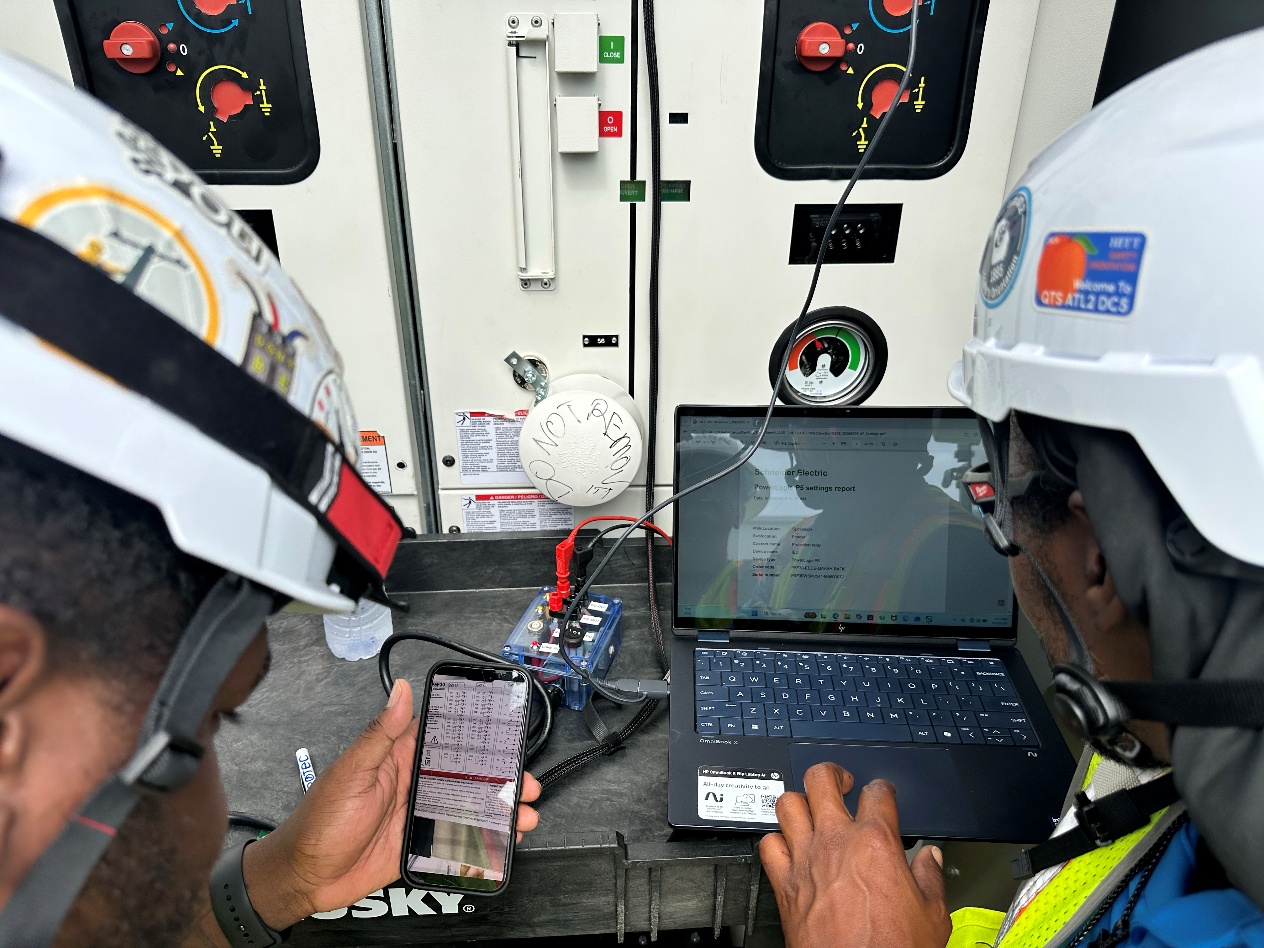
Learning by doing
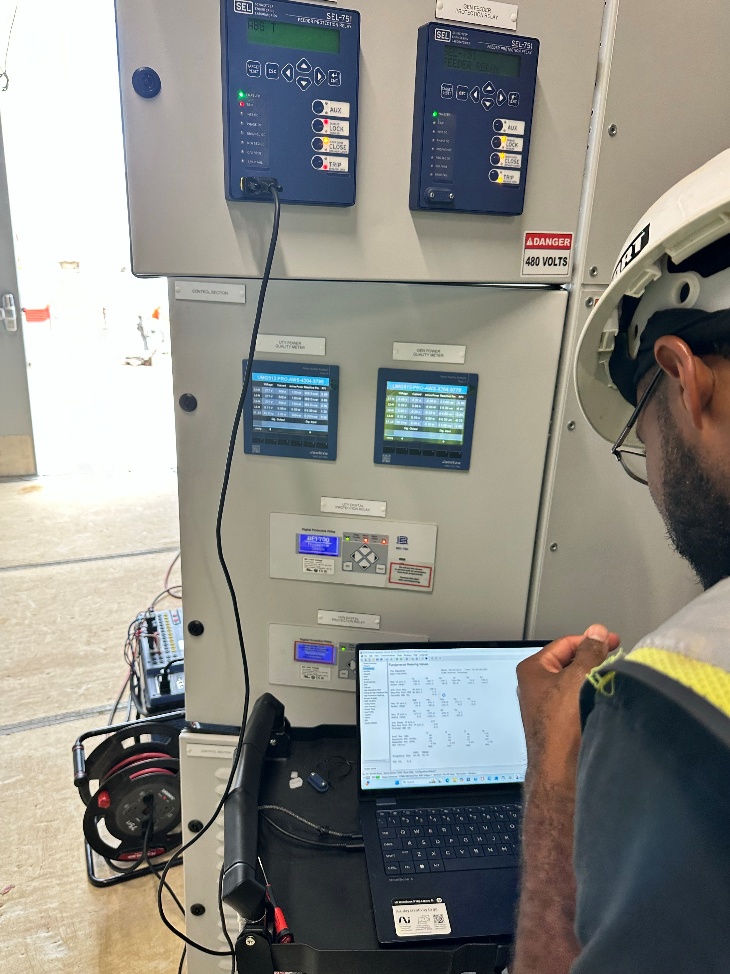
Protective relay testing has a reputation for being one of the more advanced disciplines in electrical testing, and there is good reason for that. Modern electrical distribution systems can involve complex protection schemes, communication protocols, control logic, sequence components, directional elements, and applications that require significant technical knowledge and experience to understand. But that complexity can also create an unintended barrier to technician development. Sometimes we treat relay testing as though a technician must understand all of protection theory before being allowed to meaningfully participate in the work. I don’t think that is how the workforce develops the best. A technician can still be learning why a protection element operates while being able to connect a test set correctly, establish communications with a relay, retrieve and save settings, verify I/O operation, validate metering accuracy, execute a test routine, document results, and recognize when something doesn’t look right. Those are not insignificant skills. They are part of becoming relay technicians. In other words, “still learning” should not mean “not allowed to learn.”
Consider a relatively common overcurrent test. The underlying protection theory matters. A technician should understand pickup conditions, time-current characteristics, coordination, CT ratios, relay logic, and the relationship between primary and secondary quantities. But does a junior technician need complete mastery of the theory behind all those subjects before participating in a 50/51 protection element relay test? I don’t believe so.
Instead, we can break the work into pieces:
- →Teach the technician how to interpret the diagrams.
- →Allow them to learn where the relay receives its current and voltage input signals.
- →Teach them how to safely establish temporary control power.
- →Show them how to set up and connect the testing equipment.
- →Teach them how to communicate with the relay and retrieve the settings.
- →Show them how to identify the elements being tested from the settings.
- →Have them execute pre-defined test procedures under supervision.
- →And review the test results with them.
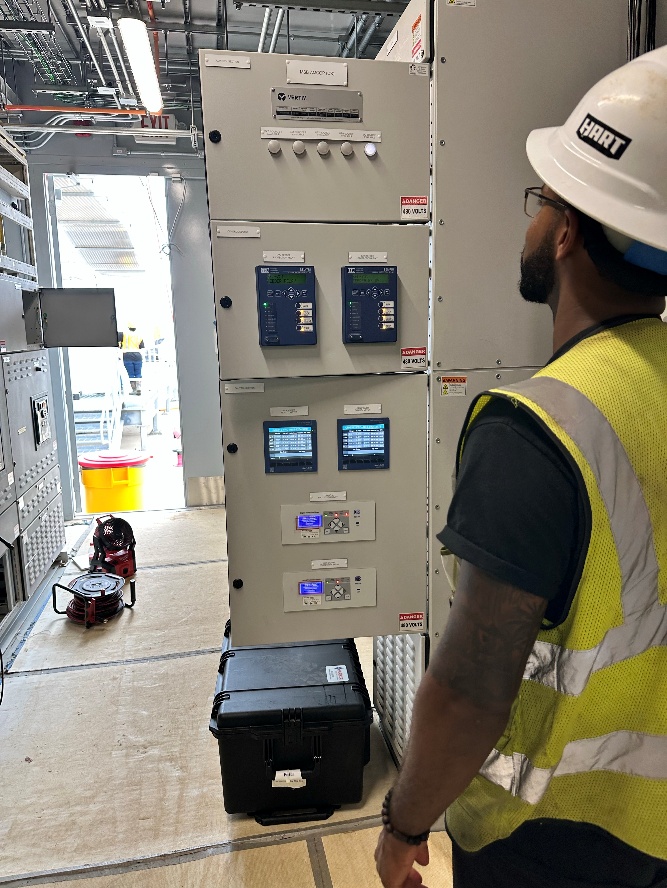
Structure lowers the cognitive load
Each of those activities creates another opportunity to connect the physical work to the underlying theory. The technician does not have to understand everything before touching the equipment. The equipment can become part of the learning experience itself.
There is sometimes discomfort with giving junior technicians detailed test procedures or automated test routines because of the concern that they may simply follow instructions without understanding what they are doing. That concern is legitimate because a procedure should never replace technical understanding. But a good procedure can provide a foundation while that understanding develops. A developing technician learning relay testing should not be forced to remember every terminal command and be able to explain the purpose behind every testing routine, while simultaneously trying to understand protection theory and three-phase power behavior, at first. Proper mentoring and supervision allow us to reduce that cognitive load initially, then add it back as the technician’s understanding and independence grows. A well-designed mentoring program can give the technician a structured way to learn:
- →What equipment is required
- →What software is needed
- →How to establish communications
- →How to retrieve, save, and compare relay settings
- →How to connect and configure the test set
- →What test routines to apply
- →What results are expected
- →How the results are documented
- →How the relay is returned to service
- →And which conditions require stopping and asking for help
A well-designed work instruction is not a substitute for technical knowledge. It gives the technician enough direction to perform the work while gradually learning the job step-by-step. As their understanding grows, their reliance on the instructions should naturally decrease.
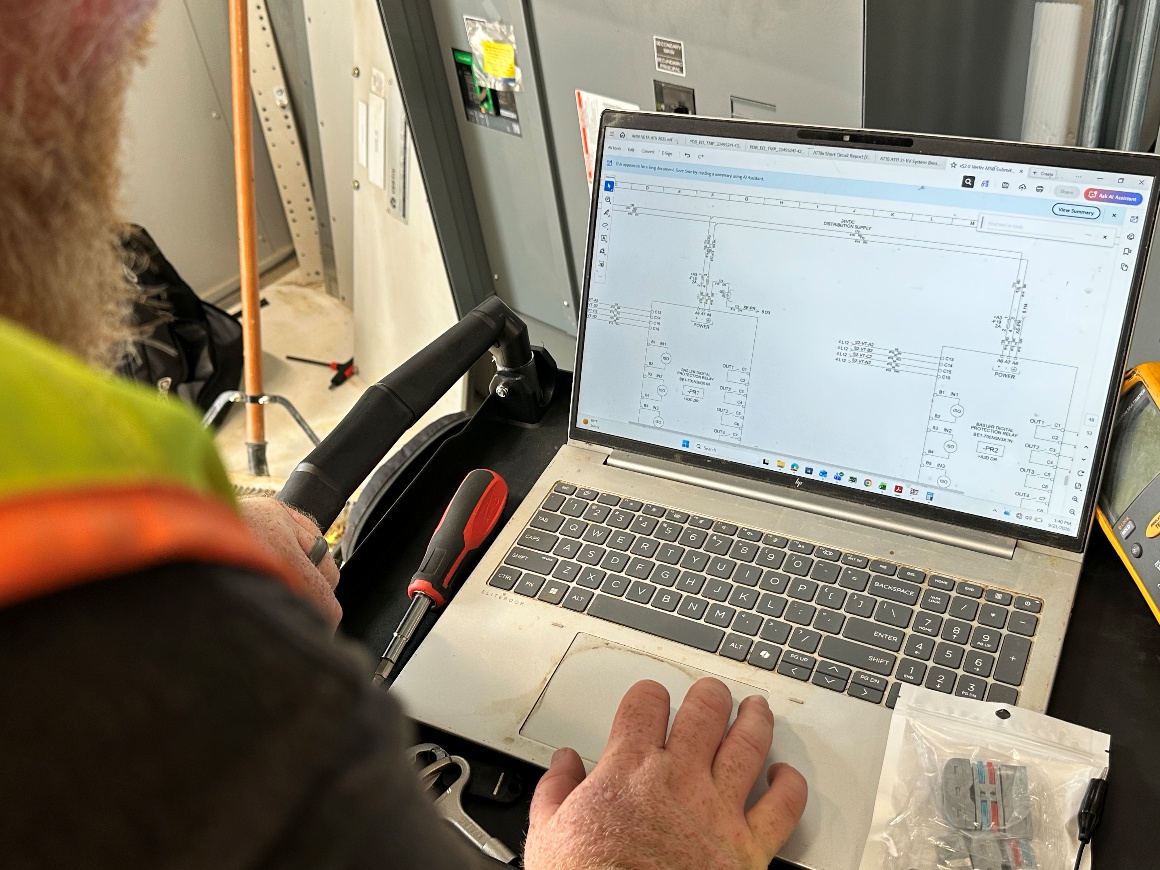
Competence includes knowing when to ask
One of the most important lessons we can teach a developing technician is that competence does not mean you need to have every answer. It means recognizing what you understand, what you do not, and when to seek help. A developing technician should learn to question results that do not make sense, settings that do not match the documentation, or test routines that behave unexpectedly. When those situations arise, the technician should know when to pause, explain what they are seeing, and involve someone with more knowledge and experience to help determine the next step.
That kind of judgment is not a sign that the technician is unprepared, it is part of becoming reliable. Knowing when to stop and ask questions is a technical skill, and our development programs should reinforce that behavior rather than making technicians feel they must know everything before they are even allowed to participate.
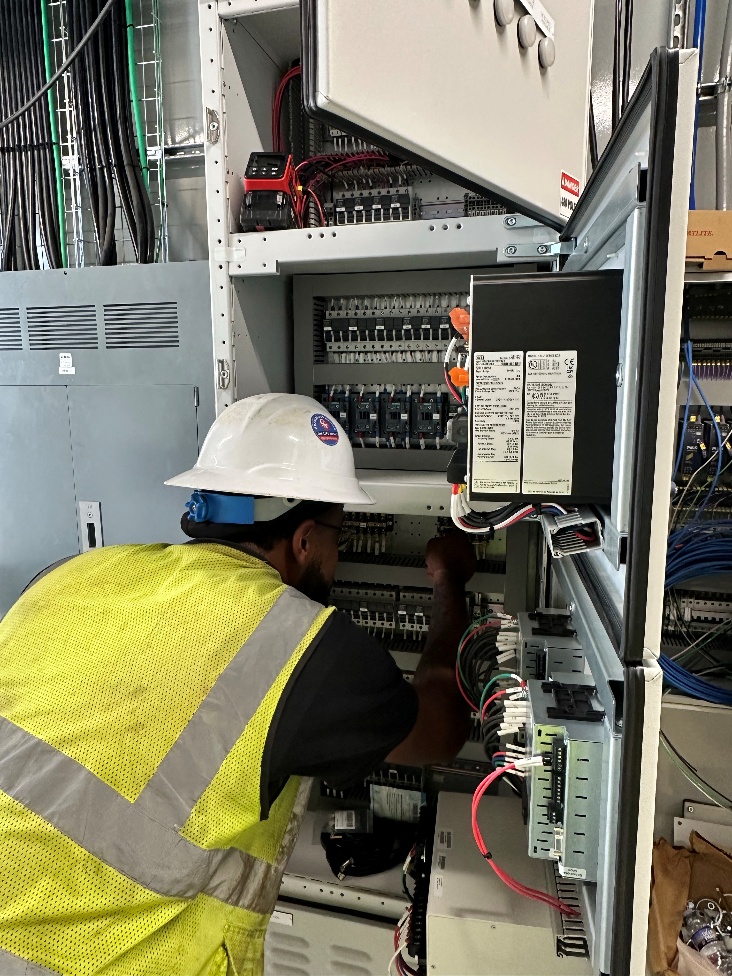
QA/QC as a development tool
Quality assurance and quality control are usually discussed as mechanisms for protecting the client and ensuring the accuracy of the final test report. They are. But QA/QC can also be one of the most powerful technician-development tools available to us. When a senior reviews a junior technician’s work, the conversation should not end with, “Fix this.” I see it more as an opportunity to ask:
- →Why did this result occur?
- →What did you expect to happen?
- →What quantity was the test set actually applying?
- →What setting controlled the operation?
- →What would you check next?
That turns QA/QC from an administrative checkpoint into another layer of understanding. With enough repetition, eventually, something else happens. The technician who once required that review begins reviewing someone else’s work. Through that same process of learning by exposure, technicians also learn how to teach by exposure. That is how technical capability begins to scale and multiply.
Build complexity deliberately
Not every relay application is appropriate for a developing technician, and the development path should reflect those differences. There is a significant gap between performing a basic overcurrent test and troubleshooting a complicated differential, communications-assisted, or distance protection scheme. A technician may begin with basic metering and 50/51 overcurrent testing. As their knowledge and field experience grows, they can move into functions such as 27/59 voltage elements and 81 frequency elements. With the appropriate theory, mentorship, and experience, they can eventually progress into differential protection and other complex schemes. The progression should be deliberate, with each new level of complexity introduced as the technician’s knowledge and experience develop. As the level of complexity increases, there should always be a point where the technician can recognize that an application is beyond their current experience and bring in someone else to help. That is not a weakness in the development model. I think it’s living proof that the model works.
Theory and field exposure must grow together
There is another side of technician development that we also need to consider. Hands-on exposure without theory eventually creates its own ceiling. A technician who only knows how to execute a test routine will eventually encounter a situation where the common routine has to be modified. That is why technical development must continue alongside field exposure. Technicians need opportunities to build their understanding of electrical fundamentals, three-phase power, CTs and PTs, phasors, prints and diagrams, protection fundamentals, relay logic, test equipment, and troubleshooting. Each of those areas gives them more context for the work they are already doing.
The whole point is that practical experience makes the theory easier to understand. A technician who has already applied three-phase voltage and current into a relay may understand a lesson on phasors very differently from someone seeing those concepts for the first time on a whiteboard or a computer screen. Theory helps us understand what we observe, while experience shows us where the theory applies. We need both.
Demystifying the relay
Relay testing should remain a respected technical discipline, but respecting the complexity of the theory does not require us to make the work seem inaccessible. If we want more capable technicians, we must create opportunities for them.
That means allowing developing technicians to participate in meaningful work, providing clear structure and work instructions, and creating an environment where uncertainty and asking for help are treated as normal parts of the work. It requires pairing field execution with mentoring and QA/QC while teaching electrical fundamentals alongside the hands-on work rather than treating them as prerequisites for participation. As technicians gain experience, their technical knowledge should continue to grow with it. The goal is not to make relay testing seem easy or pretend that every technician is ready for it. It is to show developing technicians that testing relays is learnable and give them a practical learning path. That process begins with one circuit trace, one connection, one setting, one testing routine, one question, and one lesson at a time.
We don’t develop technicians by waiting until they already know everything. We develop them by teaching them how to do it, one thing at a time.

ABOUT THE AUTHOR
Alfonso Marquez
Director of Technical Training & Development at ABM Electrical Power ServicesAlfonso Marquez is the Director of Technical Training & Development at ABM Electrical Power Services. He holds an associate degree in electronics instrumentation and a bachelor’s degree in electrical engineering and previously served in the U.S. Army’s Prime Power Battalion. His work focuses on electrical testing operations, technical training, and building practical career pathways for technical growth.